
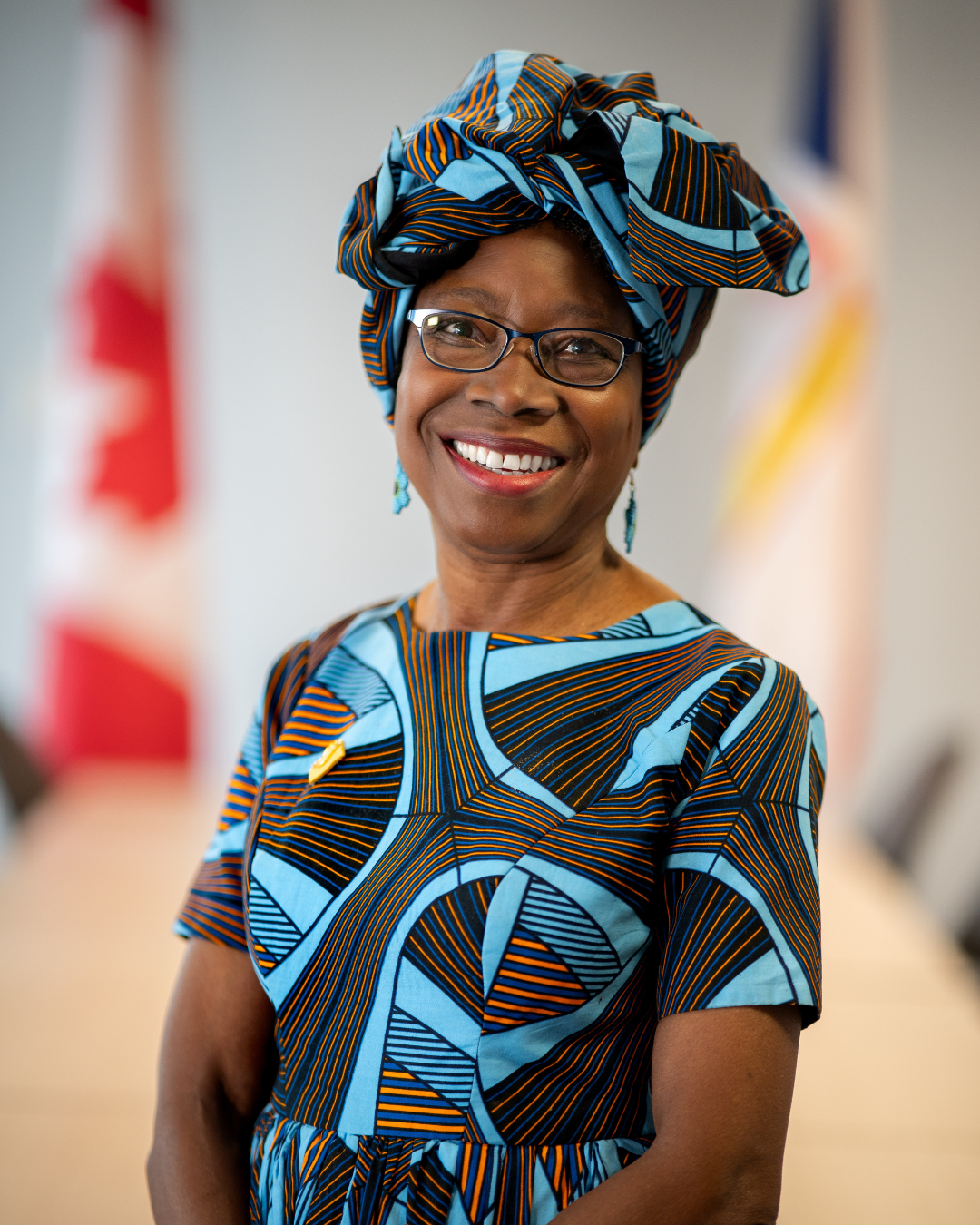
Before most institutions began discussing equity and inclusion, Dr. Lloydetta Quaicoe was already creating them.
As the founder and CEO of Sharing Our Cultures, Lloydetta has spent more than two decades building a movement that uplifts newcomer youth, champions cultural exchange, and redefines what belonging looks like in schools and communities across Newfoundland and Labrador.
Rooted in lived experience and a deep commitment to justice, her work centres student voices, challenges exclusionary systems, and celebrates difference as a source of strength. What began as a small gathering has evolved into a province-wide initiative that empowers the next generation to lead with empathy, identity, and pride.
In this conversation, Lloydetta shares the personal story behind Sharing Our Cultures, the systemic changes still needed in education, and why she believes youth are not just the future, but the present.
You founded Sharing Our Cultures more than two decades ago. This was well before diversity, equity, and inclusion became mainstream topics. What inspired you to start this work, and how has your vision evolved over the years?
I was curious about how children born outside of Canada, from diverse cultural backgrounds or racialized communities, were experiencing school in St. John’s. When children arrive in the province, they’re placed in classes based on their age and grade. Meanwhile, some have lived in refugee camps and missed years of schooling, or are coming from countries where the official language is not English or French. Or they’re from countries where the education is below the Canadian benchmark. Schoolchildren could be the only ones from their country of origin in the class or the entire school. Twenty-five years ago, only one high school offered an English as an Additional Language (EAL) program, previously known as English as a Second Language (ESL).
I conducted a study of the psychosocial needs of new immigrant and refugee school children in St. John’s. I interviewed students from grades 4 to 12, as well as their parents, teachers, principals, and guidance counsellors. I also observed the children in class and around the school. My study found that many of the youth experience social isolation, racially motivated bullying, and difficulty making friends, particularly if they are English language learners. Often, when newcomer youth enroll at school, their local schoolmates have already established close-knit friendship groups.
When I released the findings of my study, I invited newcomer high school participants to join me. I paired them with local youth for focus group sessions to discuss ways to make their school community more welcoming for newcomers. The participants decided that we would write and produce a drama production that reflects the experiences and challenges of newcomer youth, which we did. We then invited teachers and their students to the performance.
When teachers at the performance expressed their desire for their students to connect with newcomer youth, I realized the need for a regular program. Additionally, the newcomer youth participants wanted to continue meeting because they had developed friendships.
Recognizing the needs, I designed a school program that allows participants to research and prepare information about their cultures, which they share at a public event. During the event, I invite grade 6 teachers and their students to interact and learn from the school youth presenters, whom we call ‘Cultural Ambassadors’. Initially, we invited students from grades 4 to 12, but because we were turning down too many schools, I reviewed the curriculum outcomes for all the grades and found that grade 6 students were exploring world cultures in their Social Studies curriculum. This was a good fit because the grade 6 students were learning about the cultures they were studying from the Cultural Ambassadors.
Over the past 25 years, my vision for Sharing Our Cultures has continued to focus on equity, diversity, inclusion, accessibility, and antiracism. It has evolved and expanded to rural communities in all regions of the province, including Labrador. Instead of taking Cultural Ambassadors from St. John’s to rural communities, we delivered the program in rural schools with youth participants hosting their events and inviting elementary students and the public to learn about their cultures.
We have evolved to include projects that fill gaps and meet the needs of school youth. For example, when I learned that newcomer school youth were facing challenges getting part-time or summer jobs, I developed an Employment Access for Resettled Newcomers (EARN) program for school youth to enhance their academic, sociocultural, and employable skills. Since 2022, we have engaged school youth in facilitated sessions on various topics, including financial literacy, job readiness, workplace safety, Canadian workplace culture, resume writing, mock job interviews, mental health and wellbeing, health and nutrition, and future career goals. Professionals from diverse cultural backgrounds facilitate these after-school sessions. This program is funded in part by the Royal Bank of Canada’s Future Launch Program.
Another example of expanding my vision is when incidents of racism were reported in the news, and our youth participants were experiencing racism at school, I developed the project, “Motivating Equity, Diversity, Inclusion and Antiracism (MEDIA) through multimedia.” We delivered workshops on EDIA, and following the workshops, school youth reflected on what they had learned and created multimedia projects, which were exhibited at The Rooms museum, the province’s largest cultural public space, in November 2024. The students’ projects, funded in part by Canadian Heritage, are on our website at https://sharingourcultures.com/media.
Much of your work centers on creating spaces where everyone feels a sense of place and belonging. What does meaningful belonging look like to you, and what barriers still exist in achieving it across Canadian society?
Meaningful belonging ensures that everyone is accepted, respected, and valued, regardless of their identity, gender, ability, nationality, language, religion, or any markers with which society labels them. It is important to consider individuals with intersecting identities and the impact on their daily lives. Good and open communication should take into consideration the power dynamics that exist between individuals and intentionally minimize its impact when interacting with others, by assuring them that you genuinely care about who they are, how they feel, and want to learn more about them, their stories, experiences, histories, and challenges.
When someone walks into my space, they will immediately sense the warmth and welcoming smile, and my facial expression and body language tell them that they belong. It’s a space where they are free to express themselves without being judged; a space to share their cultures, experiences, fears and aspirations. For school children and youth, it is important for them to feel that they are accepted and respected for who they are as they continue to explore their own beliefs and identities. When school youth register for our programs, we ensure that they inform us of their preferred name, and we make every effort to pronounce it correctly.
Nurturing a sense of place and belonging also involves building positive, trusting relationships. At the Sharing Our Cultures Learning and Resource Centre, people drop in because they have come to consider it a safe space where their voices are heard and support is offered. We have also developed a workplace culture that’s equitable, inclusive, and free of discrimination, racism, and hate. This message is conveyed through our words and actions, policies and practices, as well as how we interact with employees and youth participants, mindful of their human rights.
The barriers that still exist to achieving a sense of place and belonging across Canadian society are discrimination, xenophobia, hate, systemic and institutional racism, and all forms of racism. There is a need to build an inclusive and equitable society where Canadians anywhere in the country have clean drinking water, access to quality healthcare, and affordable housing and postsecondary education. There is a great need to eliminate the barriers that still exist within institutions and all levels of government for meaningful belonging to be a reality for everyone..
You have led both grassroots community efforts and served on national boards and advisory councils. What has that taught you about driving systemic change from both within and outside of institutions?
It is important to drive systemic change both from within and outside institutions, and we need to be intentional about systemic changes in both spaces. For example, when I serve on national boards and advisory councils, I’m able to share my knowledge of the gaps and needs of equity-deserving communities on the local level, to contribute to decisions that will bring about change. My presence at the institutional level is of significant value in ensuring that the voices of marginalized and disempowered citizens in our country are heard. We need to be around the table where decisions are made about us. It is the idea of “nothing about us without us.”
Outside of institutions, I have the opportunity to listen to and engage with communities to understand better their experiences, particularly those of newcomer school youth and their families. There are changes, although limited, that we can make outside of institutions, such as knowledge mobilization and research, which will inform our advocacy initiatives. Whenever newcomers share the challenges they are facing, I ask, “What can we do about it?” or “What are the solutions to this problem?” or “How can we effect change?” There are solutions on the local and grassroots level and initiatives that can be implemented to enable change.
However, there are situations where systemic and institutional changes can only come from within institutions. In such cases, I seek allies from within and collaborators from outside. We request meetings with senior leadership to discuss the issues and offer constructive solutions. Then keep an open respectful communication and follow up meetings if necessary.
You have been recognized with many honours for your leadership. How do you stay grounded in this work, and what advice would you give to others leading change in their own communities?
I stay grounded in my work by being humble, actively listening to others, staying focused on the goals, and taking one day or moment at a time. I familiarize myself with the issues and decide what I can do, how I can do it, and when I can do it. I acknowledge that I can’t do everything or be everywhere at the same time, so I intentionally seek collaborators and partners. I make time to go out for lunch with friends, listen attentively and make the most of the time we are together. As a follower of Jesus Christ, I believe in prayer and worship, and I enjoy listening to Christian songs, whether alone or at a church service. I set aside time in my weekly schedule to attend church, go for walks, and read, which keeps me from being overwhelmed by stress and anxiety and working long hours during the week.
My advice is to make time for self-care and enjoy what you love with family and friends. Take every opportunity to make lasting happy memories. Find something that you can do that is stress-free and makes you happy, and fit that into your weekly schedule. Community work and change take time, so exercising patience and doing what you can—however small—while you wait will help alleviate the burden.
Looking ahead, what gives you hope about the future of equity and inclusion in Canada? How can leaders and allies support that future in more intentional ways?
What gives me hope about the future of equity and inclusion in Canada is the response we received from school youth who participate in our programs, projects, and events. I was impressed by the knowledge, insight, and understanding of equity, diversity, inclusion, accessibility, and antiracism that were evident in the writings and multimedia exhibits created by school youth. Additionally, the Government of Canada is investing in strategies at the institutional and community levels to combat racism and discrimination in racialized and marginalized communities. Grassroots organizations and communities need to continue their advocacy and EDIA work outside of institutions, while also collaborating within them.
Leaders and allies need to listen to youth, empower and support them in tangible ways that encourage agency and resilience—providing the financial and human resources required to ensure that effective programs and initiatives continue to fight against all forms of racism and discrimination in institutions and communities in Canada. Leaders and allies need to ensure that the recent backlash against EDIA is reversed and Canada continues to make strides toward an equitable and inclusive society, where everyone feels a sense of place and belonging.