
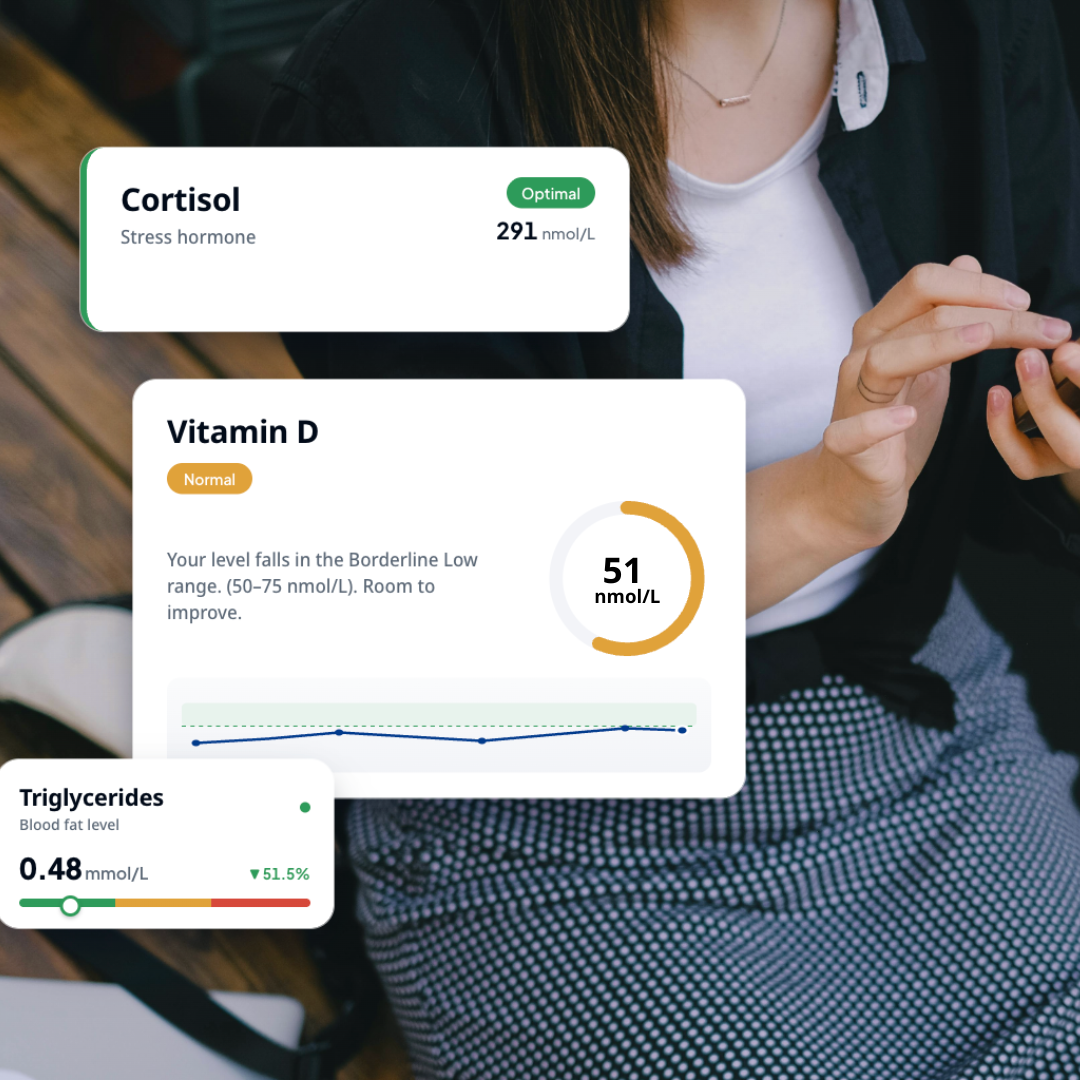
You know when something feels off. You are tired in a way that sleep does not seem to fix. Your energy is not the same. Recovery is slower. Brain fog shows up in meetings where you are used to being sharp. You are still functioning, still performing, still carrying a lot – but something does not seem right. Then you get bloodwork done and the answer comes back: “Everything looks normal.” That can be reassuring. But it can also be incomplete.
Because “normal” usually means your result falls within a broad population reference range. It does not necessarily tell you whether you are functioning at your best. It does not tell you what your personal baseline has been over time. And it does not always explain why you may feel different, even when nothing is obviously “wrong.”
That gap matters – especially for high-performing women who are used to listening to their bodies, managing complex lives, and making decisions with good information.
The Gap Is Real
Our healthcare system is good at responding to illness. But it was not built for proactive health. Standard annual reviews, if you get one, are are designed to screen for major risks, rule out obvious disease, and identify problems needing immediate attention. That is important. But this differs from understanding how your health is trending over time.
A lab value can be technically within the reference range and still be moving in the wrong direction. It can be “normal” and still sit at a level where you notice changes in energy, recovery, metabolism, or mental clarity.
Without context, trends, and interpretation, those early signals can be easy to miss.
Women’s health adds another layer. Hormones shift. Metabolism changes. Iron stores, thyroid function, inflammation, cardiovascular risk, and nutrient status can all affect how you feel and function. Yet many of these markers are not routinely tracked in a way that gives women a clear picture of what is happening in their own body.
The Physiology Behind the Data
Some of the most useful health insights come from markers that are often not part of a basic annual review.
Cardiovascular markers like ApoB can give a clearer picture of long-term risk than total cholesterol alone. Metabolic markers like fasting insulin can show early signs of insulin resistance before blood sugar becomes abnormal. Inflammatory markers like hsCRP can add important context. Nutritional markers like ferritin and B12 can help explain fatigue, low energy, and reduced resilience.
None of these markers should be interpreted in isolation. That is the point.
The value comes from putting the data together, understanding the physiology, and tracking how things change over time. A single number is useful. A trend is better. A trend that is interpreted in the context of your symptoms, your stage of life, and your goals is better still.
That is where proactive health comes in.
What ProMed Checks
At ProMed, we believe people deserve more than a checkbox that says “normal.”
Our Foundation Panel reviews a broad set of cardiovascular, metabolic, inflammatory, nutritional, and thyroid biomarkers. The goal is not to create anxiety or over-medicalize normal life. The goal is to give people clearer information earlier, so they can make better decisions. But more data alone is not the answer.
Health information is often fragmented, technical, and written for clinicians. ProMed uses AI to help synthesize results into plain-language insights that people can understand and use. We help identify patterns, track changes over time, and establish a more meaningful personal baseline.
And importantly, this is not AI replacing clinical judgment. Our model is physician-led, with foundational medical oversight built into the process. The purpose is to make health data clearer, safer, and more actionable – not to remove the clinician from the equation.
More Than “Everything Looks Fine”
You can be doing all the right things and still not have the right information.
For many women, especially in midlife, the issue is not a lack of effort. It is that the system often gives them a narrow snapshot instead of a much fuller picture. They are told things are normal, but they are not given the context to understand whether their health is optimized, stable, or starting to shift.
Proactive health is not about chasing perfect numbers. It is about understanding your body earlier, recognizing trends sooner, and having more informed conversations with your provider.
You deserve to know what your health looks like beyond “normal.”
Take control of your health.
Learn more at promedai.ca.