Five Questions With Laura Hammond, Founder of The People People
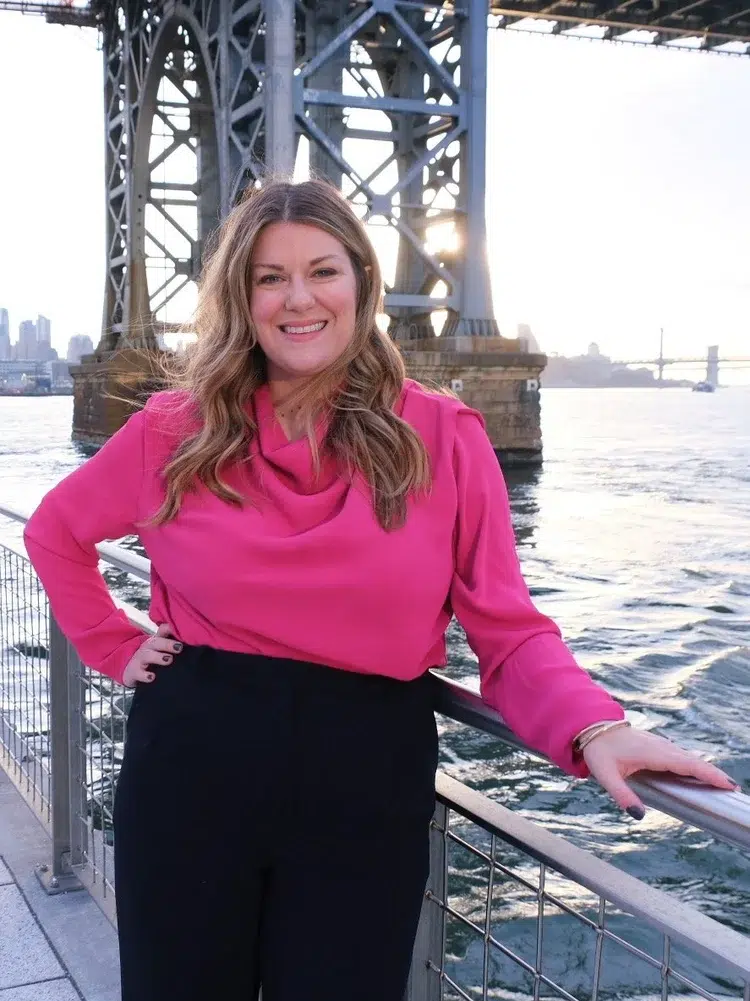
After two decades leading people and culture across government, retail, and high-growth companies, Laura Hammond believes the fundamentals of good leadership haven’t changed nearly as much as the workplace has.
Laura Hammond has spent her career seeing organizations, and leadership, from very different vantage points.
She began in the Canadian public service before moving into retail, where she held senior HR roles with H&M and Aritzia. She later joined women’s health company Tia, helping to lead its people function through a period of rapid growth. Today, she is the founder and principal consultant of The People People, working with organizations and their leaders on the people decisions that shape how a business grows.
Across those environments, Laura has seen workplaces transformed by new technology, new expectations, and new ways of working. Yet she has also found that what people need from their leaders remains surprisingly consistent.
In this Five Questions With, Laura talks about what heart-centred leadership looks like when decisions are difficult, why companies need to think carefully about the human side of AI, and what becoming an entrepreneur has taught her about the realities of leading when the risk is your own.
1. What have those very different environments taught you about what people actually need from their leaders?
On the surface, government, retail and a fast-scaling health tech company couldn’t be more different. But what people need from employees has been remarkably consistent: they need recognition for their contributions, clear goals and expectations, autonomy, a safe/predictable work environment and a sense of fairness.
In the public service, I learned the value of consistency and process. In retail, leading HR for H&M, I saw that for an hourly employee, their store manager is the company. At TiaHealth, where we grew from 67 to nearly 400 people, I learned that speed amplifies whatever leadership habits already exist, good or bad.
People rarely leave because of work. They leave because they don’t know where they stand, don’t trust that decisions are fair, or feel invisible. Leaders who get those three things right can ask a great deal of their teams.
2. What does “heart-centred” mean in practice, particularly when leaders have to make difficult decisions or deliver results?
Heart-centred isn’t about being soft. It means holding care and candour at the same time.
In practice, that means telling people the truth early, explaining the “why” behind decisions, and treating people like adults. It also means not confusing kindness with avoidance. Letting a performance issue drift for six months isn’t kind to anyone.
Difficult moments are where this matters most: restructures, exits, feedback conversations. You can’t always change the outcome, but you control how people experience it. Are they treated with care, consideration and the right level of support and information? Trust built in hard moments is what helps secure commitment to ensure that you have the right people in moments of challenge or change.
3. What are leaders getting right about this moment, and where are they getting it wrong?
What they’re getting right is the willingness to experiment. Many leaders are testing AI tools, rethinking how work gets done, and recognizing that flexibility is really about autonomy and trust, not just location.
Where they’re getting it wrong is leading with the tool instead of the people. Too often, AI is framed as an efficiency or headcount story before anyone has talked about what it means for people’s roles, skills and careers. That creates fear, uncertainty and kills adoption. How many stories have we heard about companies who have cut headcount only to need to add it back in? We’re very quickly seeing the cost of AI tools and tokens mount and create situations of real tradeoffs for organizations.
The same pattern shows up with return-to-office mandates. The decision is announced, but the reasoning isn’t. Team members are sitting in office at desks, on virtual meetings.
I feel that one of the biggest blind spots is early-career talent. The entry-level work where people used to learn the job is exactly what’s being automated. Organizations who don’t redesign how people grow will face a talent gap in five years.
4. What tends to get lost when companies grow quickly, and what should leaders protect as they scale?
The first thing lost is usually the manager layer. Companies promote their best individual contributors into leadership and then give them no support. Those new managers become the bottleneck for everything: engagement, performance, retention.
The second is the unwritten culture. At 30 people, culture lives in the founder’s head and in daily access to them. At 300, it has to live in how decisions are made, what behaviors are being rewarded and how people are hired, how they’re paid and promoted. Leaders should protect three things: manager capability, fairness in their people practices, and clear communication about where the company is going.
People programs and infrastructure isn’t about creating bureaucracy. It’s about you ensure human capital decisions are made through a consistent framework.
5. What has becoming an entrepreneur taught you about leadership that you couldn’t have learned as an executive?
As an executive, I advised on risk. As a founder, I own it. That shift changed how I show up for my clients.
I now understand, from the inside, what CEOs mean when they say every decision is both a business decision and a people decision. There’s no one to escalate to, and a hard call about cash flow sits right beside one about how it affects a person.
It has also taught me the discipline of saying no. That means no to work that isn’t the right fit, and no to growth that would compromise the quality or the heart of what we do.
Most of all, it has made me a better partner to the leaders I support. I’m not just an HR advisor anymore. I’m a fellow founder who knows how lonely that seat can be.